

The Role of Endobiogeny in Modern Medicine

Something is missing from healthcare and your practice of medicine.
Do you feel burned out? Are you worn down by one size fits all guidelines and check boxes? Do you feel there is more to medicine but aren’t sure what that is or how to find it? We help you find what’s missing.
Endobiogeny brings more to medicine and more to your practice.
Put the whole person at the center of your healing work.
It’s based on over 100 years of scientific research and over 40 years of clinical application. We have transformed medicine by expanding the one-cause, one-treatment model to a multi-factorial, multi-treatment approach based on the preponderance of evidence. From genetics and epigenetics to metabolism to nutrition, today’s medicine has to be comprehensive in understanding and addressing all salient factors of disease. Our model of health and disease anticipates, prevents and treats rare and common disorders.
Practice medicine that focuses on health care rather than sick care. Place your relationship with the patient as a whole person back in the center of your healing work.
Watch: How Endobiogeny transforms medicine & lives
Knowing deeper
We believe physicians are meant to heal, not just suppress symptoms or slow down the fatal progression of disease. Endobiogeny sees everything as connected in life.
We’ve constructed interconnected models of disorders. Recognizing these connections and applying the endobiogenic models brings a higher knowledge and a deeper understanding to why your patient is ill. It opens the door to multiple treatment possibilities beyond the pharmacological to treat the root causes of disease.
The tools to treat better
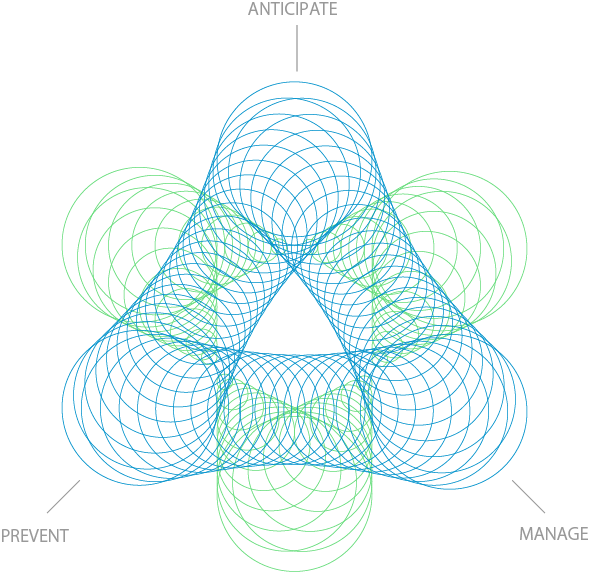
Anticipate, prevent and manage disease.
Endobiogeny gives you the tools to anticipate, prevent and manage disease through a more comprehensive approach to testing and diagnosis.
Our flagship software, GEMMA, brings mathematical certainty and clinical insights like no other analytical system can. Take back the prerogative and power of healing and enjoy medicine again.
Testimonials
Frequently asked questions about SBRG
Is Endobiogeny a new concept?
No. The theory of Endobiogeny was first presented over 40 years ago and has been taught in post-graduate courses with university affiliation around the world.
How come Endobiogeny isn’t taught in university?
The concepts of Endobiogeny have been and are taught in several universities around the world. Master’s degrees are available for pharmacists and physicians in these countries. Disruptive scientific innovations take time to enter the official medical cannon.
Is Endobiogeny alternative medicine?
No. It’s an advancement on the current biomedical model of health and disease by applying systems theory and the principles of integrative physiology. Endobiogeny promotes rational, evidenced-based standards of care. Where none are available, Endobiogeny offers insights by addressing underlying imbalances, which renders the “untreatable” treatable. Our four-volume textbook series The Theory of Endobiogeny cites over 1000 scientific and clinical references establishing the grounds of our theory and supporting over 50 years of clinical experience.
Can I train in Endobiogeny?
Yes. Endobiogeny is the science of integrative physiology and clinical medicine. It’s primarily targeted to physicians. Based on scope of practice parameters in various countries, other healthcare professionals have been trained. Click here to learn more.
When can I train in Endobiogeny?
How can endobiogeny be integrated into my practice?
Endobiogeny can be integrated into any medical practice in the hospital or private practice setting. There are four aspects to clinical endobiogeny: history, examination, blood evaluation and treatment. Many practitioners have found it help to start by applying their learnings in endobiogeny in this order.
First start by noticing themes in the patient’s history. Then, add endobiogenic questions to enhance the anamnesis. Let’s take the example of pre-menstrual syndrome (PMS). You can ask if the patient craves for specific foods, or, is fatigued during PMS.
Second, when you feel ready, add focused examination points. In the example of PMS, palpate the pancreas, liver and gallbladder to cross-correlate cravings. Evaluate for signs of adrenal and thyroid imbalances, such as hyperpigmentation or striae, and, distal lower extremity edema, respectively.
Third, when you feel ready, order GEMMA panels that evaluate these same physiologic elements. For PMS, start with the Adrenal Balance, Quantitative Thyroid and Inflammation panels. All these can be performed with a CBC with differential, TSH, fT4 and fT3 as a screening test. The GEMMA panels offer interpretation and treatment suggestions to personalize the development of your therapeutic approach to the specific patient.
Fourth, if appropriate for your scope of practice and acceptable to your practice partners or tertiary care institution, recommend the pharmacological and non-pharmacological interventions proposed by the GEMMA analytic system. In addition to medications, lifestyle, diet, vitamins, minerals, amino acids, enzymes and medicinal plant therapy may be proposed.